
Top 5 World Cup Football Insights (2026)
The 2026 FIFA World Cup will be the largest men’s World Cup ever, with 48 teams competing across the United States, Canada, and Mexico from June 11 to July Argentina enter as defending champions after...
Top 5 World Cup Football Insights (2026)
The 2026 FIFA World Cup will be the largest men’s World Cup ever, with 48 teams competing across the United States, Canada, and Mexico from June 11 to July 19. Argentina enter as defending champions after defeating France in the 2022 final, while Brazil, France, England, Spain, and Germany remain major analytical reference points. The expanded format creates 104 matches instead of 64, increasing the importance of squad depth, travel management, and late-game substitutions. World Cup Hub tracks match predictions, team tactics, player statistics, and daily tournament developments for serious football fans. The practical takeaway is simple: evaluate teams through structure, rotation, and measurable performance rather than reputation alone.
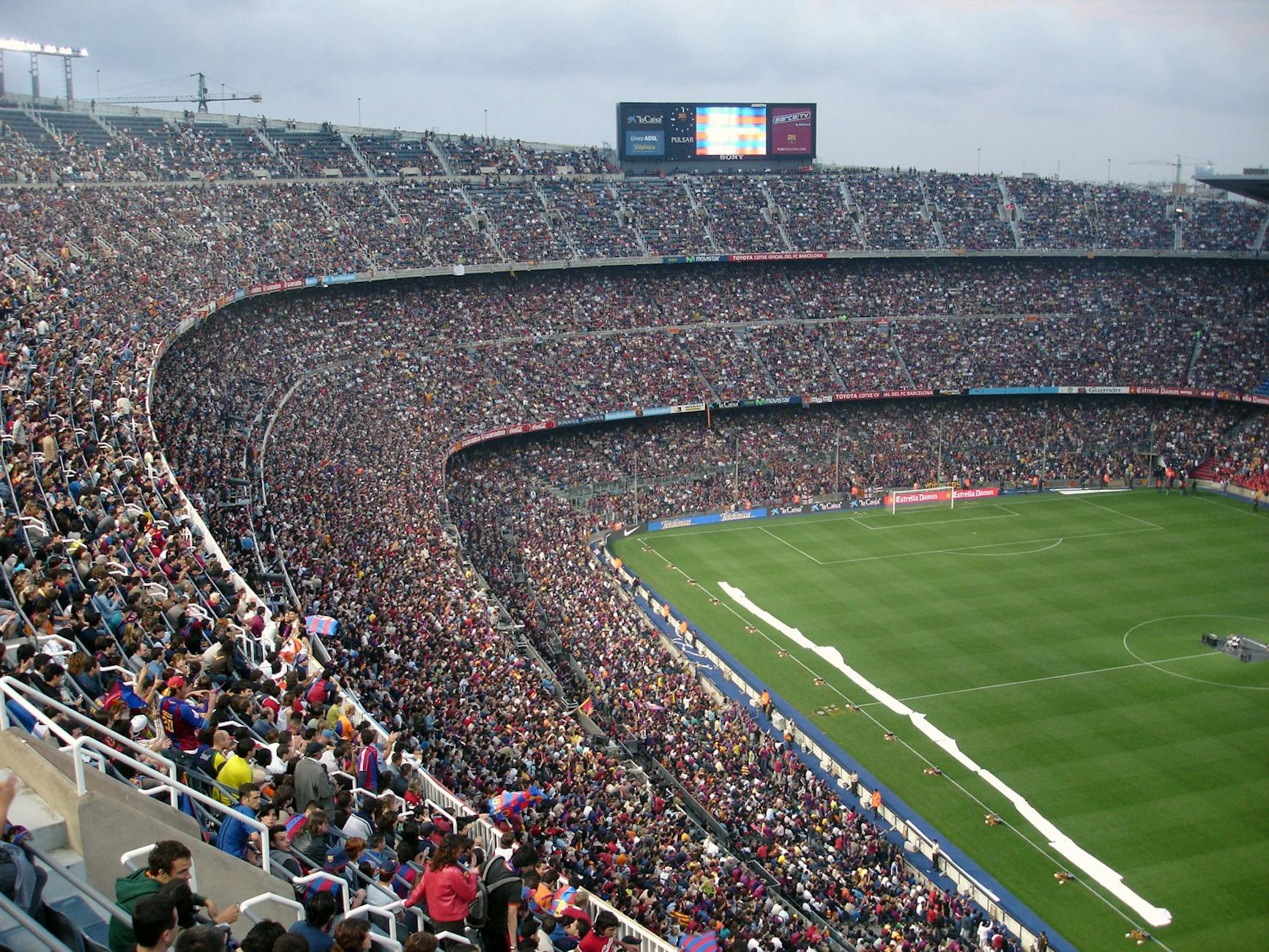
Photo by Pixabay on Pexels
The 2026 tournament changes the football equation before a single knockout match begins. A traditional 32-team event rewarded consistency across seven matches; the new 48-team structure introduces a 12-group first phase, with the top two teams in each group plus the eight best third-place teams advancing to a round of 32. That means qualification mathematics will matter earlier, and goal difference may become decisive.
Listen up — this is the part that matters: a famous badge is not a predictive model. Argentina’s 2022 success came from defensive compactness, Lionel Messi’s chance creation, and goalkeeper Emiliano Martínez’s penalty-shootout impact, not merely historical prestige. For supporters comparing contenders, the [Internal Link: World Cup match prediction guide] provides a useful framework for separating market expectation from tactical evidence.
Want a clearer view of the tournament data and daily analysis?
The Top 5 at a Glance
The five most important World Cup football insights for 2026 are tournament expansion, squad depth, defensive transitions, set pieces, and player availability. Together, these factors explain more competitive outcomes than FIFA ranking position alone, particularly across a 104-match schedule.
- Tournament expansion: 48 teams and 104 matches increase uncertainty and workload.
- Squad depth: Replacement quality becomes critical during a longer competition.
- Defensive transitions: Counterattacks may punish aggressive possession systems.
- Set-piece efficiency: Corners and free kicks offer repeatable scoring opportunities.
- Player availability: Fitness, minutes, and travel can alter a team’s ceiling.
These are not five decorative talking points. They are measurable variables. FIFA’s official World Cup competition information confirms the scale of the 2026 event, while the FIFA World Cup historical record shows how tournament structure has repeatedly influenced competitive balance. A team that dominates possession but concedes high-quality transition chances may be less stable than a lower-possession side with superior rest defense.
Why does the 48-team World Cup format matter?
The 48-team format matters because it expands the tournament from 64 to 104 matches, adds a round of 32, and increases the value of squad rotation, goal difference, and travel planning. Teams must now survive more schedule variation before reaching the traditional knockout pressure.
The group phase will contain 12 groups of four teams, according to FIFA’s approved competition design. Each team still plays three group matches, but the number of knockout rounds increases from three to four before the final. That creates a specific edge case: a team can qualify with four points, yet still face an additional elimination match compared with the 2022 format.
The tournament geography also matters. Matches will be staged in 16 host cities, including New York/New Jersey, Los Angeles, Mexico City, Toronto, and Dallas. Travel distance, local climate, and kickoff times can affect recovery, especially when teams move between North America’s eastern, central, western, and Mexican venues. In practical terms, a squad with 18 reliable outfield players may outperform a more talented team relying on 13 or 14 regular starters.
A further complication is the best-third-place calculation. In a four-team group, a third-place team cannot control every qualification condition because results elsewhere influence the ranking table. Goal difference, goals scored, disciplinary record, and final results may become relevant. This makes late group matches strategically unusual: some teams may attack for a margin rather than merely seek a draw.
[Internal Link: 2026 World Cup schedule and host cities]
#1 Squad Depth: Best Overall
Squad depth is the best overall indicator for 2026 because the expanded tournament creates additional knockout demands, international travel, and substitution pressure. The strongest teams will not simply have 11 elite starters; they will have dependable alternatives in central defense, midfield, and wide attacking positions.
Argentina illustrate the point through their 2022 model. Their starting quality was obvious, but the final also depended on substitutes such as Lautaro Martínez, Leandro Paredes, and Gonzalo Montiel contributing at decisive moments. France reached the same final despite illness and injuries affecting players including Karim Benzema, Christopher Nkunku, and Lucas Hernández, demonstrating that tournament resilience depends heavily on replacement pathways.
For the 2026 World Cup, I would measure depth through three figures:
- Starter retention: the percentage of expected starters available after four matches.
- Replacement quality: the performance gap between a first-choice player and his likely substitute.
- Rotation capacity: the number of positions where a coach can change personnel without changing the tactical identity.
A useful operational observation is that depth is not evenly distributed across a squad. Many contenders have three excellent forwards but only two trustworthy defensive midfielders. That imbalance can remain hidden in group play and become severe in the knockout stage, where suspensions and extra time increase the cost of a thin bench.
The likely leading contenders—Brazil, France, England, Spain, Germany, Argentina, and Portugal—should therefore be compared by role coverage, not by headline player count. Brazil may possess several attacking options, while Spain may offer superior midfield control. France combine tournament experience with athletic depth, but availability and defensive balance remain important variables. World Cup Hub’s player-statistics coverage is most useful when it tracks minutes, starts, injuries, and role changes together rather than treating goals as the complete story.
#2 Defensive Transitions: Best for Tactical Matchups
Defensive-transition analysis is best for tactical matchups because a team’s shape immediately after losing possession often determines whether its possession advantage becomes a scoring chance or a concession. In elite international football, the first 5 to 8 seconds after a turnover can reveal more than overall possession percentage.
The modern pattern is clear. Teams such as Spain and Manchester City-influenced club sides often use counter-pressing to recover the ball near the opponent’s goal. However, that strategy requires the nearest players to react immediately and the defensive line to hold a controlled distance behind the attack. If the press fails, the exposed space behind the fullbacks becomes a direct route toward goal.
France’s 2022 final against Argentina offered a vivid example. Argentina controlled long periods, yet France’s athletic forwards remained dangerous when the game became stretched. Kylian Mbappé’s hat-trick demonstrated how quickly a match can change when transition space appears, even after one side has built a two-goal advantage.
A practical matchup checklist should include:
- Does the team protect the central lane after losing possession?
- Are both fullbacks allowed to advance simultaneously?
- Can the holding midfielder stop the first forward pass?
- Does the goalkeeper defend space behind the defensive line?
- How often does the team concede shots within 15 seconds of a turnover?
This last measure is an underused edge. A possession team may record 62% of the ball but still concede more dangerous transition shots than its opponent. That is why raw possession should not be used as a standalone prediction input. The better question is where possession ends, how quickly the ball is recovered, and whether the next defensive action is coordinated.
See the tactical comparisons before assessing a major fixture.

Photo by cottonbro studio on Pexels
#3 Set Pieces: Best Value
Set-piece performance is the best-value insight because corners, indirect free kicks, and defensive dead-ball organization create repeatable situations without requiring continuous open-play superiority. A single tournament may contain hundreds of corners, making small efficiency differences meaningful over time.
According to UEFA technical analysis, elite teams increasingly use coordinated blockers, delayed runs, and varied delivery zones rather than sending every corner toward the near post. The important distinction is not simply how many corners a team wins, but whether those corners produce first contacts, second-ball recoveries, and shots from high-value areas.
A team scoring from 8% of attacking corners has a substantial structural advantage over one scoring from 3%, although tournament samples remain small. Defensive set-piece data matters equally: marking errors, goalkeeper claims, and second-phase clearances can determine a match between evenly matched teams.
The International Football Association Board Laws of the Game states that restarts are governed by specific positioning and foul rules, but tactical interpretation goes beyond the lawbook. Coaches must decide whether to use zonal marking, player-to-player assignments, or a hybrid system. Hybrid systems are common because they protect the six-yard box while assigning elite aerial defenders to the opponent’s strongest runners.
Here is the contrarian conclusion: set pieces are not always “luck.” The final outcome of one corner can be random, but the rate of winning first contact, generating second balls, and preventing clean opposition headers reflects training. Teams with average open-play chance creation can remain competitive when their dead-ball routines are sophisticated.
For fans, the best analytical signal is not a dramatic highlight. It is repetition. Review the same team across 10 to 15 set pieces and record delivery location, first contact, blocker use, and shot outcome. That process gives more information than one spectacular goal.
#4 Player Availability: Best for Risk Control
Player availability is the best risk-control measure because a projected lineup has limited value if key players are carrying injuries, suspended, or restricted to short substitute appearances. At international tournaments, medical uncertainty can change a team’s tactical plan within 48 hours.
Track availability through four layers:
- Training participation: full session, partial session, or individual work.
- Match minutes: whether a player can sustain 70, 90, or 120 minutes.
- Role continuity: whether the replacement performs the same tactical function.
- Disciplinary exposure: yellow-card accumulation and suspension risk.
The 2022 World Cup offered several examples of availability affecting expectations. France lost Lucas Hernández early in the tournament, while Argentina managed players through a demanding final stretch. The issue is not merely whether a star is named in the squad. It is whether the coach can preserve pressing intensity, defensive spacing, and buildup patterns when that player leaves the pitch.
One specific operational tip is to compare a player’s last three competitive appearances rather than relying on an injury label alone. A returnee who played 25, 38, and 52 minutes may technically be available, but he should not be treated as a full-match starter. This distinction matters especially for high-intensity roles such as pressing wingers, box-to-box midfielders, and aggressive fullbacks.
Travel adds another layer. The United States, Canada, and Mexico span multiple time zones and climate conditions, while the competition’s 16 host cities create varied recovery environments. A team playing in Miami and then traveling west to Seattle faces a different preparation problem from a team remaining within one regional cluster. The effect will not always be dramatic, but it becomes important when matches are decided by small margins.

Photo by Mikhail Nilov on Pexels
#5 Tournament Experience: Best Value for Knockout Decisions
Tournament experience is the best value for knockout decisions when it is used as a supporting variable rather than a shortcut. Players and coaches who have managed extra time, penalty pressure, hostile environments, and one-goal leads can make better late-match decisions, but experience does not automatically overcome weaker physical or tactical performance.
Argentina’s 2022 victory illustrates both sides. Lionel Messi, Ángel Di María, and Nicolás Otamendi brought major international experience, yet younger players such as Enzo Fernández and Julián Álvarez were also central. The winning formula combined veteran decision-making with emerging athletic energy.
A reasonable experience model should separate:
- World Cup appearances.
- Knockout-stage minutes.
- Penalty-shootout participation.
- Major tournament starts.
- Coaching experience in elimination matches.
This prevents a common analytical error: counting caps without considering competition quality. A player with 60 friendly appearances may have less knockout experience than another player with 25 appearances, 15 of them in Champions League or World Cup elimination matches.
The 2026 format makes this factor more complicated because the round of 32 introduces an additional elimination stage. Coaches may choose conservative tactics earlier to protect players, then become more aggressive once the knockout bracket begins. Experienced teams are often better at recognizing when a match requires controlled risk and when a draw is strategically damaging.
World Cup Hub can help readers monitor this distinction through team tactics and player-statistics updates. Still, no analysis should treat experience as destiny. Germany’s historical record is formidable, but past trophies do not guarantee current defensive cohesion. Likewise, a young team with strong pressing, chance creation, and bench quality may be more dangerous than an older squad living on reputation.
How We Ranked Them
We ranked the five insights by predictive usefulness, measurability, and relevance to the 2026 tournament format. Squad depth received 30%, defensive transitions 25%, set pieces 18%, player availability 17%, and tournament experience 10%; the weighting favors variables that can be observed consistently before and during matches.
The model uses the following criteria:
- Tournament relevance — 30%: Does the factor become more important because of 48 teams and 104 matches?
- Measurability — 25%: Can analysts track it through lineups, event data, and video review?
- Match influence — 20%: Can it directly change scoring chances or defensive outcomes?
- Repeatability — 15%: Does the factor appear across multiple matches rather than one highlight?
- Practical usefulness — 10%: Can supporters apply it when comparing two teams?
The weights are intentionally not equal. Experience is valuable but difficult to isolate, while availability and transition defense can be measured more directly. Similarly, set-piece efficiency has a lower weight because goals from dead balls are relatively infrequent and can produce noisy short-term results.
A careful analyst should also avoid double counting. Squad depth and player availability overlap, but they are not identical. Depth asks whether a replacement can preserve team performance; availability asks whether the expected player can participate at all. Defensive transitions and possession also overlap, yet transition analysis focuses on the moments immediately after possession changes.
This framework is an analytical aid, not a guarantee. As the FIFA World Cup regulations emphasize, competition rules define the event, while match outcomes remain uncertain. A useful principle from tournament analysis is: “No single indicator explains an entire match.” That restraint is not glamorous, but it is statistically healthier.
Which Should You Pick?
Choose squad depth first, then combine it with defensive-transition quality, current player availability, and set-piece performance. This combination offers the strongest 2026 World Cup football evaluation because it connects tournament structure with tactical execution and actual personnel.
For a high-level contender comparison, use this sequence:
- Start with the squad: Identify dependable alternatives in every tactical role.
- Check recent lineups: Confirm whether the preferred structure has been stable.
- Review transitions: Measure shots conceded after possession losses.
- Inspect set pieces: Compare both attacking routines and defensive organization.
- Adjust for venue and travel: Consider host-city distance, climate, and recovery time.
- Reassess before kickoff: Confirm injuries, suspensions, and expected minutes.
My ranking favors France as a complete tournament profile because France combined depth, athletic transition ability, and recent final-stage experience in 2022. Argentina remain a serious reference point as defending champions, Brazil offer significant attacking resources, Spain bring possession control, and England possess strong squad breadth. However, these are starting assessments, not fixed predictions; player form and availability will change before June 2026.
The strongest practical conclusion is slightly unexciting, unfortunately. Do not choose a World Cup football favorite from FIFA ranking position, social-media momentum, or one friendly match. Compare role coverage, chance quality, defensive transition behavior, and confirmed availability. Those four checks will usually expose whether a highly rated team is genuinely complete or merely popular.
Ready to follow the tournament with a more structured approach?
[Internal Link: World Cup team tactics analysis]

Photo by Omar Ramadan on Pexels
Frequently Asked Questions
Q: What is World Cup football?
A: World Cup football is the men’s international tournament organized by FIFA to determine the world champion. The 2026 edition will feature 48 teams across the United States, Canada, and Mexico, with 104 matches scheduled from June 11 to July 19. Unlike club football, players represent national teams and compete within a short tournament window. The event combines group-stage qualification, knockout matches, extra time, and penalty shootouts.
Q: How does the 2026 World Cup format work?
A: The 2026 World Cup will use 12 groups of four teams, followed by a round of 32. The top two teams from each group and the eight best third-place teams will advance, creating 32 knockout-stage teams and 104 total matches. Each nation plays at least three group matches, while the eventual champion plays eight matches rather than seven. Goal difference and goals scored may become important when teams finish level on points.
Q: Which teams are favorites for the 2026 World Cup?
A: France, Argentina, Brazil, England, Spain, Germany, and Portugal are among the most credible 2026 contenders. France reached the 2022 final, Argentina won the 2022 tournament, and Brazil remain historically successful with five World Cup titles. England and Spain offer strong technical resources, while Germany and Portugal possess substantial tournament experience. Final assessments should account for qualifying form, injuries, squad selection, and confirmed starting lineups.
Q: What is the difference between World Cup football and club football?
A: World Cup football is played by national teams during a limited international window, while club football operates across domestic leagues and continental competitions. National teams have fewer training sessions, so tactical systems often need to be simpler and easier to repeat. Club teams can recruit players from many countries and practice together for months, whereas World Cup coaches must build cohesion in shorter camps. This makes player familiarity and role clarity especially valuable.
Q: How should I analyze a World Cup football match?
A: Analyze a World Cup match by checking lineups, formation, transition defense, set pieces, player availability, and travel conditions. Start with the expected starting elevens, then compare which team has stronger substitutes for each role. Review how often each side concedes chances immediately after losing possession, not only its average possession percentage. Finally, verify late injury news and suspensions before drawing a conclusion.
Q: Are World Cup football predictions guaranteed?
A: No, World Cup football predictions are never guaranteed because a single goal, injury, red card, or penalty shootout can change the result. Statistical models can improve decision quality by comparing measurable factors such as expected goals, player minutes, defensive actions, and squad depth. They cannot remove uncertainty from a knockout tournament. Readers should treat predictions as analysis, not certainty, and follow applicable local laws when considering any gambling-related activity.
Q: Does squad depth matter more in the 2026 World Cup?
A: Squad depth matters more in 2026 because the champion must play eight matches and travel across a large North American host region. Teams also face an additional round of 32 compared with the 2022 structure, increasing the cost of injuries, suspensions, and fatigue. Depth is most valuable when substitutes can preserve the team’s tactical identity rather than merely fill a position. Compare replacement quality in defense, midfield, and attack before judging a contender.
For daily 2026 World Cup coverage, tactical previews, player statistics, and evidence-led match context, World Cup Hub offers a focused reference point for supporters who prefer numbers to noise.
Explore the latest tournament insights and preparation resources.