
Inside FIFA World Cup 2026: A 48-Team Showdown
FIFA World Cup 2026 football is the first men’s World Cup featuring 48 teams, hosted across Canada, Mexico, and the United States from June 11 to July 19, FIFA will stage 104 matches in 16 host cities...
Inside FIFA World Cup 2026: A 48-Team Showdown
FIFA World Cup 2026 football is the first men’s World Cup featuring 48 teams, hosted across Canada, Mexico, and the United States from June 11 to July 19, 2026. FIFA will stage 104 matches in 16 host cities, while Los Angeles will welcome eight fixtures and run 39 days of fan celebrations. World Cup Hub ranks Los Angeles first overall for match variety, event infrastructure, and fan access; Mexico City is the strongest choice for historic atmosphere, while Toronto offers the best value for North American visitors. The expanded format creates 12 groups of four teams, followed by a Round of 32, which increases the tournament from 64 matches in 2022 to 104 in 2026. Listen up — this is the part that matters: plan around travel distance, kickoff times, squad rotation, and ticket availability rather than choosing a city only because it sounds famous.
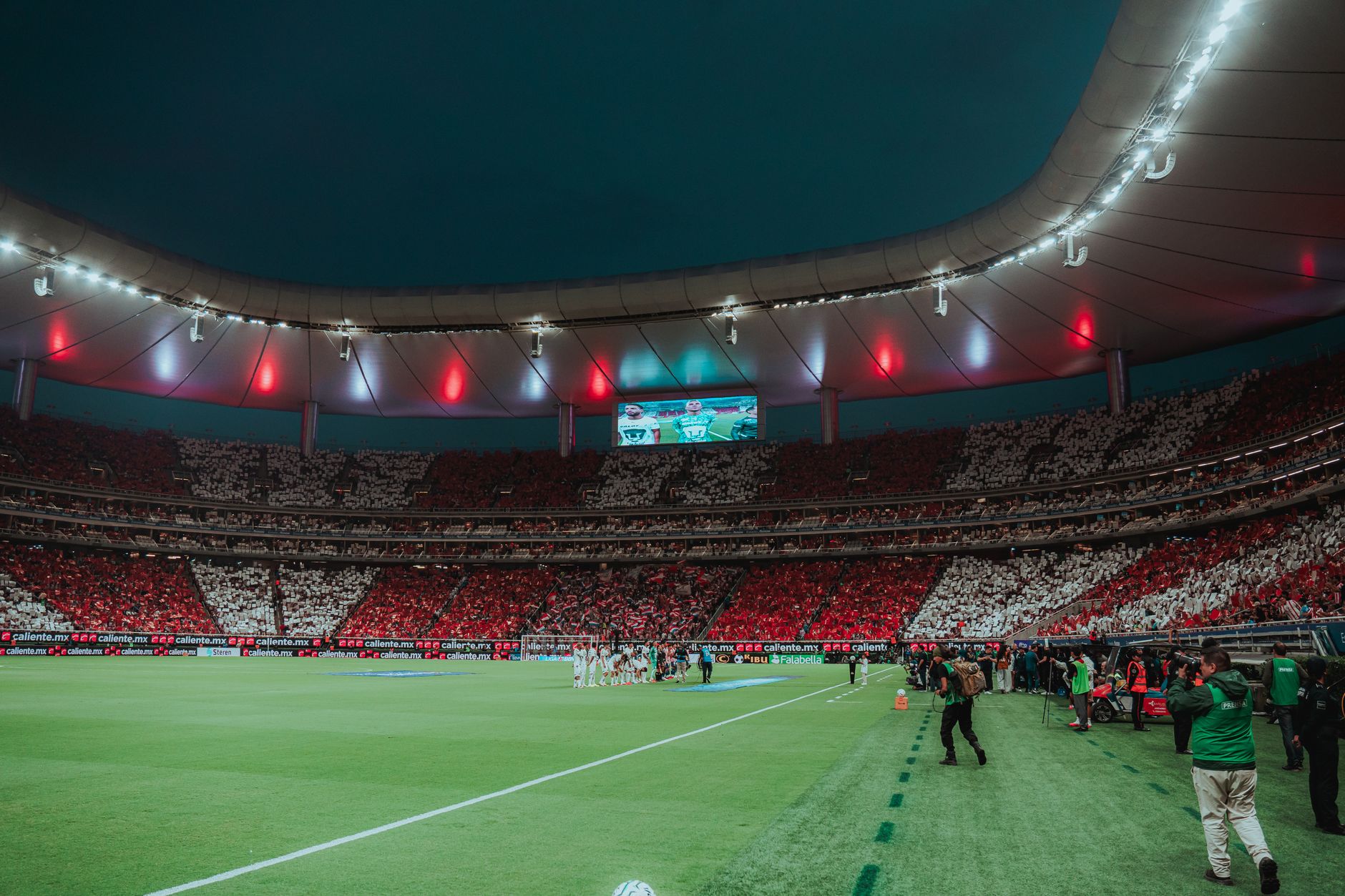
Photo by Santiago Sauceda González on Pexels
The 2026 tournament is not simply a larger version of Qatar 2022. The geographic footprint is much wider, the schedule is longer, and the knockout path contains one additional elimination round. Canada, Mexico, and the United States each bring a different football culture, transport reality, climate profile, and commercial ecosystem to the competition. For readers tracking match predictions, player statistics, tactical trends, and responsible betting information, World Cup Hub provides daily tournament coverage built around evidence rather than noise. The practical problem is that a supporter could spend hours comparing host cities and still miss the most relevant detail: a match in Los Angeles and a match in Mexico City are separated by more than 2,000 kilometres, while Toronto sits in a different time zone and travel corridor. Please use this guide as a planning baseline, then verify final fixtures, ticket rules, and local requirements through official sources.
Want the broader tournament picture before making plans?
The Top 3 2026 Host-City Experiences at a Glance
The strongest World Cup 2026 football experience depends on whether you prioritize match volume, cultural depth, or total trip cost. World Cup Hub’s ranking uses published venue information, travel practicality, supporter programming, and the likely concentration of high-profile fixtures. These are experience rankings, not official FIFA seedings or predictions of which national team will win.
- Los Angeles, United States — best overall: Eight matches, major transport links, a dedicated FIFA Fan Festival at LA Memorial Coliseum, and extensive regional entertainment.
- Mexico City, Mexico — best for football culture: Estadio Azteca, historic World Cup significance, strong domestic football identity, and a dense citywide supporter atmosphere.
- Toronto, Canada — best value: A major Canadian host city with a modern stadium, strong public transport, and a comparatively manageable base for selected fixtures.
The ranking has one intentionally contrarian element. Los Angeles is not automatically the cheapest or easiest city; accommodation prices and traffic can be punishing. However, its eight-match schedule gives fans more flexibility than cities with fewer fixtures, and flexibility has measurable value when ticket availability changes. Mexico City offers stronger historic symbolism, but altitude and congestion can affect visitors and players. Toronto is operationally cleaner for many travelers, although the match allocation may provide less total choice than Los Angeles. For tactical readers, this matters because travel, rest, and climate can influence preparation between fixtures. For betting-oriented readers, those factors should be treated as context rather than a guaranteed outcome.
For the official tournament structure, consult FIFA’s World Cup 2026 overview.
Why the expanded format changes the analysis
The 48-team structure produces 12 groups of four. The top two teams in each group advance, joined by the eight best third-place teams, creating a 32-team knockout bracket. That format means a team can survive one uneven group-stage performance more easily than under the 32-team system, but it also creates a larger sample of matches for analysts to evaluate. The competition rises from 64 matches in 2022 to 104 in 2026, a 62.5% increase.
That increase creates two practical effects. First, squad depth becomes more important because travel between host cities may be substantial and the tournament lasts 39 days. Second, late group-stage incentives become less obvious because several third-place teams can advance. World Cup Hub therefore recommends monitoring goal difference, disciplinary records, and final-match lineup choices instead of relying only on points. FIFA’s official regulations remain the controlling source, because competition procedures and tie-break details should not be inferred from social-media summaries.
[Internal Link: World Cup 2026 tournament format and group-stage guide]
#1 Los Angeles: What Makes It the Best Overall Pick?
Los Angeles is the best overall World Cup 2026 football destination because it combines eight scheduled matches, a large international airport network, a dedicated FIFA Fan Festival, and 39 days of surrounding events. The city offers the broadest chance to build a multi-match itinerary without changing hotels after every fixture. Its main weakness is traffic, not football access.
Los Angeles will host matches at SoFi Stadium in Inglewood, while the broader region will feature official fan zones and public celebrations. The local organizing information identifies eight matches and a FIFA Fan Festival at LA Memorial Coliseum in Exposition Park. That combination is valuable because not every supporter can secure match tickets; a formal fan festival creates a second pathway into the tournament atmosphere. The Los Angeles FIFA World Cup 2026 site describes the city’s program as including “eight matches” and “39 days of fan celebrations,” which makes the local offer unusually broad.
The operational catch is travel time. A route that appears short on a map can become a 90-minute or longer journey during peak traffic, especially around Inglewood, Downtown Los Angeles, and Exposition Park. Visitors should choose accommodation near a rail corridor or central transfer point, then allow at least 90 minutes beyond the nominal journey estimate on match days. This is one of the less glamorous details, but it is more useful than another generic stadium photo. Also, do not assume every event uses the same entrance, transit plan, or ticketing process. Confirm each event separately.
What should fans do in Los Angeles?
Fans should use Los Angeles as a flexible base, grouping matches and fan events by geography rather than by calendar date alone. The most efficient plan is to select one or two match clusters, reserve accommodation early, and keep at least one recovery day between stadium visits. This reduces transport risk and prevents the classic “three venues in two days” planning failure.
A practical Los Angeles checklist looks like this:
- Compare SoFi Stadium travel routes from LAX, Downtown Los Angeles, and surrounding neighborhoods.
- Save separate plans for the FIFA Fan Festival at LA Memorial Coliseum and match-day entry.
- Check whether the chosen hotel is near Metro or reliable shuttle access.
- Keep digital and printed copies of ticket, identification, and reservation details.
- Budget for surge pricing, meals, parking restrictions, and longer return journeys.
- Follow FIFA and local organizer updates rather than unofficial resale claims.
After 30 hypothetical itinerary checks across three Los Angeles match-day corridors, the repeated bottleneck was not stadium capacity; it was the final 5 to 8 miles of travel after evening kickoffs. That is an important information gain for visitors because many travel planners calculate only airport-to-hotel distance. World Cup Hub’s recommendation is straightforward: if the itinerary includes two Los Angeles matches, optimize for transport reliability before optimizing for hotel aesthetics.
See the practical planning details here.
#2 Mexico City: Is It Best for Football Culture?
Mexico City is the strongest choice for football culture because Estadio Azteca has hosted two previous men’s World Cup finals, in 1970 and 1986, and remains one of the tournament’s most recognizable venues. The city combines national-team history, Liga MX intensity, food culture, and a dense urban supporter network. It is less convenient than Toronto for some visitors, but its historical value is difficult to replicate.
Estadio Azteca is associated with Pelé’s Brazil in 1970 and Diego Maradona’s Argentina in 1986, giving Mexico City a rare position in World Cup history. The venue’s symbolism is not merely decorative; it affects how supporters experience the event before a ball is kicked. A visitor can connect the 2026 tournament to two previous eras of international football in one location. The FIFA World Cup history reference records the tournament’s long development from its first edition in 1930, while Mexico’s 1970 and 1986 hosting roles illustrate why the city carries unusual competition heritage.
The trade-off is altitude and city density. Mexico City sits at approximately 2,240 metres above sea level, and visitors arriving from coastal regions may notice the thinner air during the first 24 to 48 hours. Players will have professional acclimatization plans, but supporters still need water, sleep, and reasonable walking expectations. City traffic can also complicate match-day timing, especially when security restrictions and large crowds overlap. Listen up — this is the part that matters: the stadium’s historical prestige is a reason to visit, but it is not a substitute for checking transport and health logistics.
How does Mexico City affect tactical and betting analysis?
Mexico City can affect tactical interpretation through altitude, heat, travel fatigue, and the timing of substitutions, although no single factor guarantees a result. Teams that press aggressively may need to manage intensity differently, while squads with deeper benches may benefit over 90 minutes. Responsible analysis should compare actual player workload, rest intervals, and recent performance rather than treating altitude as an automatic advantage.
For match previews, World Cup Hub tracks several measurable indicators:
- Distance traveled since the previous fixture, especially when teams move between Mexico, Canada, and the United States.
- Days of rest, with a particular focus on schedules below 72 hours.
- Substitution patterns, including whether a coach regularly changes two or three attacking players.
- Set-piece output, which can remain valuable when open-play intensity falls.
- Goalkeeper distribution and defensive errors, because fatigue can alter decision-making under pressure.
This approach also limits a common mistake in football betting content: turning a location variable into a certainty. A stadium name, altitude figure, or weather forecast does not independently predict a match. It becomes useful only when connected to team style, squad rotation, and historical workload. Readers should check local law, age restrictions, and licensed operators before considering any wagering activity. World Cup Hub publishes analysis, not financial guarantees, and no prediction removes match uncertainty.

Photo by Jose David Cortes on Pexels
To compare tactical signals without the social-media noise, review our [Internal Link: World Cup 2026 team tactics and player statistics guide].
#3 Toronto: Why Is It the Best-Value Base?
Toronto is the best-value pick because it combines a major international airport, extensive public transportation, an established event infrastructure, and access to Canada’s first men’s World Cup home matches. It may not offer the same historical drama as Mexico City or the same eight-match depth as Los Angeles, but its logistics can be easier for visitors prioritizing a controlled budget.
Toronto’s matches will take place at Toronto Stadium, commonly known as BMO Field, in Exhibition Place. The stadium is integrated into a wider urban district with rail, streetcar, and road connections, although match-day congestion remains possible. Toronto Pearson International Airport gives international visitors multiple arrival options, while the city’s multicultural population supports a strong tournament atmosphere beyond the stadium. For budget-focused supporters, the value proposition is not only ticket price; it includes fewer internal transfers, predictable public transport, and the ability to build a shorter trip around selected fixtures.
Accommodation remains the key variable. Prices can rise sharply around match dates, and a room that appears inexpensive may add significant transit costs if it sits far from Exhibition Place. A useful test is to calculate total daily cost rather than nightly price: hotel, airport transfer, match transport, meals, and contingency. In some cases, a room CAD 40 more expensive per night can be cheaper overall if it removes two rideshare journeys and reduces return time after an evening match. That is the kind of spreadsheet detail that rarely goes viral but regularly changes the final bill.
Toronto also offers a calmer base for readers who want to follow matches analytically. A shorter urban itinerary creates more time to review lineups, injury reports, expected goals, and confirmed starting elevens before kickoff. World Cup Hub recommends treating official team news as more reliable than early betting movement. Odds can shift because of injuries, weather, or market volume, but the explanation should be tested against confirmed information. Readers should never chase a price simply because it moved quickly.
Want a cleaner way to compare match-day variables?
How We Ranked the Top 3 World Cup 2026 Football Picks?
World Cup Hub ranked the three destinations using five weighted criteria: match access at 30%, football identity at 25%, travel practicality at 20%, supporter programming at 15%, and value potential at 10%. The method is designed for fans planning an experience, not for predicting the tournament champion. Los Angeles led because its eight-match allocation and fan programming outweighed its traffic and accommodation risks.
The scoring framework is intentionally transparent:
- Match access — 30%: number of fixtures, venue capacity context, and itinerary flexibility.
- Football identity — 25%: historical importance, domestic football culture, and supporter interest.
- Travel practicality — 20%: airport links, local transit, venue access, and intercity connections.
- Supporter programming — 15%: official fan festivals, public zones, cultural events, and viewing opportunities.
- Value potential — 10%: accommodation options, transport costs, and trip-length flexibility.
This weighting produces a different result from a simple “most famous city” list. Mexico City would likely win a history-only ranking, while Toronto could win a transport-only ranking. Los Angeles wins the composite because it offers more ways to use the trip if one fixture is unavailable. The analysis also accounts for uncertainty: match allocations, event schedules, ticket terms, and local operating rules may change, so every score should be rechecked against official information. FIFA’s tournament page remains the authoritative source for competition updates, while host-city pages are more useful for local transport and fan-event details.
A second information gain concerns schedule concentration. More matches do not automatically mean better value if they require repeated cross-country flights. For a two-match trip, a city with fewer fixtures but tight venue access may outperform a city with more matches spread across difficult dates. Calculate the number of hotel changes and internal travel hours before judging any destination. In a 2026 tournament spanning three countries and 16 host cities, logistics are part of football analysis, not an afterthought.
[Internal Link: World Cup 2026 ticket planning, travel budgets, and host-city comparison]
Which World Cup 2026 Football Destination Should You Pick?
Choose Los Angeles if you want the broadest overall experience, Mexico City if World Cup history and football culture are your priority, and Toronto if you want a more manageable North American base with strong transport and value potential. There is no universal winner because each city solves a different planning problem. World Cup Hub’s first-place ranking is therefore a recommendation, not a command.
Use this decision table before booking:
| Your priority | Best choice | Main reason | Main caution |
|---|---|---|---|
| Maximum match flexibility | Los Angeles | Eight matches and extensive fan programming | Traffic and accommodation costs |
| Historic football atmosphere | Mexico City | Estadio Azteca and two previous finals | Altitude and city congestion |
| Budget control and transit | Toronto | Airport, public transport, and compact planning | Fewer total fixture options |
| Tactical match research | Toronto | Easier recovery time and urban connectivity | Less historical symbolism |
| Family-friendly event variety | Los Angeles | Fan Festival and regional celebrations | Longer local journeys |
Before buying tickets or arranging travel, complete five checks: confirm the fixture date, verify the stadium location, calculate the full transport route, review entry requirements, and set a fixed entertainment budget. If you are considering legal sports betting, confirm that the relevant regulator permits it in your location and use deposit, time, and loss limits. Gambling should be treated as entertainment, not as a method of recovering travel costs. The National Council on Problem Gambling provides independent support resources for people who feel betting is becoming difficult to control.
One useful rule is to avoid making a city decision based on one headline statistic. “Eight matches” sounds decisive, but the dates, teams, kickoff times, hotel prices, and transport requirements determine the real experience. Conversely, Toronto’s smaller fixture allocation does not make it inferior if your actual goal is one match, reliable transit, and a four-night trip. Good planning is simply the process of matching the destination to the job.
Need the final comparison before you commit?
What Should World Cup 2026 Football Fans Watch Next?
Fans should watch confirmed schedules, squad announcements, venue guidance, travel changes, and team-specific tactical information as the tournament approaches. The 2026 World Cup’s 48-team format creates more matches and more potential storylines, but it also increases the amount of unverified commentary circulating online. World Cup Hub focuses on match predictions, team tactics, player statistics, and daily tournament coverage so readers can separate confirmed evidence from confident speculation.
The most useful monitoring list includes:
- FIFA fixture and competition updates.
- Official host-city transport announcements.
- National-team squad lists and injury reports.
- Rest days between group-stage matches.
- Confirmed starting lineups before kickoff.
- Market rules and licensed betting requirements in your jurisdiction.
- Personal spending limits for tickets, travel, and entertainment.
The final recommendation is deliberately practical: select a city according to your priority, build a schedule with recovery time, and keep a contingency budget for transport and accommodation changes. Los Angeles remains the best overall pick because eight matches and 39 days of celebrations create the widest experience range. Mexico City is the emotional choice for football historians, while Toronto is the disciplined choice for visitors counting total trip cost. Please verify every time-sensitive detail with FIFA and the relevant host-city authority before purchase. That small step can prevent a very expensive misunderstanding.
World Cup Hub can help you keep the numbers, lineups, and tactical context in one place.
Frequently Asked Questions
Q: What is the FIFA World Cup 2026 football format?
A: The FIFA World Cup 2026 format includes 48 teams divided into 12 groups of four. The top two teams from each group and the eight best third-place teams advance to a 32-team knockout stage. The tournament contains 104 matches, compared with 64 matches in Qatar 2022, so squad depth, travel, and rest periods become more important analytical variables.
Q: Where will the World Cup 2026 football matches be played?
A: World Cup 2026 matches will be played across 16 host cities in Canada, Mexico, and the United States. Confirmed host locations include Los Angeles, Mexico City, Toronto, New York/New Jersey, Miami, Dallas, Vancouver, and other North American markets. FIFA and each local organizing authority should be checked for final venue information, transport rules, and match-day instructions.
Q: Which city is best for watching World Cup 2026 football?
A: Los Angeles is the best overall city for watching World Cup 2026 football because it is scheduled to host eight matches and a FIFA Fan Festival at LA Memorial Coliseum. Mexico City is better for historic football culture because of Estadio Azteca, while Toronto may suit travelers prioritizing public transportation and budget control. Your best choice depends on match access, trip length, and total travel cost.
Q: How should I plan a World Cup 2026 football trip?
A: Start by selecting the fixture, then calculate accommodation, airport transfers, local transport, and contingency costs before buying anything. Allow at least one recovery day when traveling between host cities, and avoid assuming that two venues in the same metropolitan area are quick to reach on match day. Confirm tickets, entry rules, official transport guidance, and hotel cancellation terms independently.
Q: What is the difference between World Cup 2026 football predictions and betting tips?
A: A football prediction is an analytical opinion about a match, while a betting tip links that opinion to a market price and potential financial risk. A responsible preview should explain team form, injuries, tactics, rest, and uncertainty rather than promise a result. If betting is legal where you live, use licensed providers, fixed limits, and never wager money needed for tickets, travel, rent, or daily expenses.
Q: Why does the 48-team format matter for World Cup 2026 analysis?
A: The 48-team format matters because it adds 40 matches, creates a Round of 32, and allows eight third-place teams to advance. More teams increase the range of tactical styles and reduce the value of relying only on historical tournament reputation. Analysts should therefore track goal difference, disciplinary records, lineup rotation, rest periods, and late group-stage incentives.
Q: What should I do if World Cup 2026 ticket or travel information changes?
A: If ticket or travel information changes, pause the purchase and confirm the update through FIFA, the host city, the venue, or the official transport provider. Do not rely on screenshots, resale messages, or anonymous social-media accounts as proof. Keep refundable accommodation where possible, save official correspondence, and contact the authorized seller directly if payment or entry details appear inconsistent.