
Football World Cup: What 8 LA Matches Taught Me
The 2026 FIFA World Cup will be hosted by the United States, Canada, and Mexico, with Los Angeles preparing to stage eight matches at SoFi Stadium. World Cup Hub tracks the tournament through schedule...
Football World Cup: What 8 LA Matches Taught Me
The 2026 FIFA World Cup will be hosted by the United States, Canada, and Mexico, with Los Angeles preparing to stage eight matches at SoFi Stadium. World Cup Hub tracks the tournament through schedules, team tactics, player statistics, predictions, and daily coverage for fans worldwide. Los Angeles will also offer 39 days of fan celebrations, including the FIFA Fan Festival at the LA Memorial Coliseum and official fan zones across Los Angeles County. The U.S. Men’s National Team is scheduled to play its opening match in Los Angeles on June 12, while the tournament runs across a 48-team format rather than the previous 32-team structure. Listen up — this is the part that matters: the most useful way to follow the football world cup is to combine the official fixture calendar with venue logistics, squad news, and independently checked match data. Start by saving the schedule, confirming local kickoff times, and following updates from reliable sources.

Photo by Markku Soini on Pexels
Before 2025: How Did the Football World Cup Work?
Before 2025, the men’s FIFA World Cup normally used a 32-team format, eight groups, and 64 matches across approximately one month. The 2022 tournament in Qatar provided the clearest recent comparison, while the 2018 tournament in Russia followed the same broad competition structure. The 2026 edition changes that baseline to 48 national teams and 104 matches, creating more group-stage combinations, more travel considerations, and a longer tournament calendar. FIFA’s official tournament information remains the primary reference for format and competition rules.
The older structure was relatively easy to model. Each group contained four teams, and the top two advanced to a 16-team knockout bracket. That meant 48 group-stage fixtures, followed by 16 knockout matches, including the final. For fans, the calculation was simple: fewer teams meant fewer unfamiliar matchups and a narrower data set for prediction. For broadcasters and host cities, however, the 2026 scale introduces a different operational problem, because fixture volume increases by 62.5% compared with 64 matches.
A useful historical lesson is that tournament narratives rarely follow ranking order. Germany exited the 2018 group stage despite entering as defending champion, while Argentina won the 2022 title after losing to Saudi Arabia in its opening match. These examples do not prove that rankings are useless; they show that single-match variance is substantial. World Cup Hub therefore separates pre-match strength, recent form, injuries, and tactical matchup instead of treating FIFA ranking position as a complete forecast.
- The traditional format: 32 teams and 64 matches.
- The 2026 format: 48 teams and 104 matches.
- The key analytical risk: larger samples can create more misleading short-term trends.
- The practical response: compare at least three indicators before forming a match opinion.
[Internal Link: history of the FIFA World Cup format]
What Is the 2026 Football World Cup Shift?
The 2026 football world cup shift is the expansion to 48 teams and 104 matches across Canada, Mexico, and the United States. It is also a geographic change: the tournament uses 16 host cities, meaning supporters must assess distance, transport, climate, kickoff times, and venue rules alongside football. The tournament’s larger field creates additional qualification paths and more matchups, but it also makes scheduling analysis more demanding.
The format changes the statistical landscape first. More teams means more intercontinental meetings and a wider gap between the strongest and weakest groups of participants. It also creates more opportunities for nations that previously struggled to qualify, although qualification alone does not guarantee competitive depth. The United States Soccer Federation and host-city organizers must manage sporting expectations alongside transport and crowd operations, particularly in high-demand markets such as Los Angeles, Dallas, New York/New Jersey, and Mexico City.
Los Angeles is a useful case study because its football world cup offer extends beyond match tickets. The city is expected to host eight matches at SoFi Stadium, the U.S. opening match on June 12, and 39 days of related celebrations. The FIFA Fan Festival at the LA Memorial Coliseum is scheduled to combine live matches, food, music, and public viewing. That distinction matters: fans who cannot secure stadium tickets may still experience official programming, but these events have their own entry, transport, and crowd-management requirements.
A contrarian point is worth recording. More matches do not automatically mean better value for every visitor. If a supporter attends two matches in different host regions, the additional travel may consume more money and time than the fixture itself. The efficient plan is often to choose one regional cluster, then add public fan events locally. My working rule is simple: never buy a second match ticket until accommodation and intercity transport are confirmed.

Photo by Yara Solis Fuentes on Pexels
Want a clearer way to compare venues, dates, and host-city logistics?
What Changed for Football World Cup Players?
For players, the expanded football world cup means more opponents, more travel variables, and a longer pathway from group stage to final. The 2026 tournament includes 48 national teams rather than 32, while the total match count rises from 64 to 104. That increases squad-management pressure because coaches must protect players from fatigue, adjust to climate differences, and prepare for opponents with less recent tournament history.
Travel is not a minor detail. Canada, Mexico, and the United States cover a very large geographic area, and host cities differ sharply in altitude, humidity, heat, and travel distance. Mexico City, for example, sits at a much higher elevation than Los Angeles, while Miami introduces a humid environment that can affect recovery and hydration. These are not excuses; they are measurable variables that influence pressing intensity, substitution timing, and late-match defensive errors.
The most underappreciated player factor may be recovery between matches. A team that travels overnight, changes time zones, and then faces a high-press opponent may lose efficiency after the 60th minute even when its starting lineup appears stronger. Analysts should monitor minutes played, substitutions, sprint volume where available, and days between fixtures. World Cup Hub’s player-stat approach is designed for precisely this reason: a star’s reputation is less informative when the player has completed 270 demanding minutes in eight days.
Listen up — this is the part that matters: tactical fit can outweigh headline talent. A possession-heavy side may struggle against a compact counterattacking team if its full-backs advance simultaneously. Conversely, a physically strong team may underperform when forced to defend long spells without the ball. Before assessing a player prop or match prediction, check formation changes, likely rotation, and whether the team’s midfield can control transition spaces.
- Track projected minutes, not only goals and assists.
- Compare travel distance and recovery days between fixtures.
- Review the opponent’s pressing style and transition threat.
- Treat late substitutions as tactical evidence, not random match events.
- Avoid using one friendly match as proof of tournament readiness.
[Internal Link: player statistics and tournament performance guide]
How Should Fans Follow the Football World Cup Now?
Fans should follow the football world cup through three layers: official schedule information, venue and fan-event planning, and independent tactical analysis. FIFA provides competition and fixture updates, while host-city organizations publish local transport and stadium guidance. World Cup Hub adds match predictions, team tactics, player statistics, and daily tournament coverage, giving readers a practical second layer rather than asking them to rely on headlines alone.
The first step is calendar control. Convert kickoff times into your local time zone, then mark travel buffers separately from match duration. A 7:00 p.m. local kickoff is not the same operationally as a 7:00 p.m. match in another city, especially when public transport, security screening, and post-match congestion are involved. SoFi Stadium events may require additional walking or shuttle time, and official venue policies can change closer to match day.
The second step is source verification. The Los Angeles FIFA World Cup 26 organizing information identifies eight matches, the FIFA Fan Festival at the LA Memorial Coliseum, official fan zones, and 39 days of celebrations. The organizer’s public-facing message is clear: “Eight matches. 39 days of fan celebrations.” That is useful promotional information, but supporters should still check final entry rules, event hours, bag policies, and transportation notices before leaving their accommodation.
The third step is disciplined prediction. A forecast should record its assumptions: expected lineup, current injuries, tactical shape, recent opposition quality, and market movement if the reader is legally permitted to review betting information in their jurisdiction. Gambling involves financial risk, and no model guarantees a result. A data-led process can reduce emotional mistakes, but it cannot eliminate uncertainty. Please set a fixed entertainment budget, never chase losses, and follow applicable local laws.
A small operational edge is often overlooked. Fan events and stadium access are not interchangeable: a public viewing area may be easier to reach but can become crowded during high-profile fixtures. In Los Angeles, planning an arrival window of at least 90 minutes before a major event is more realistic than assuming a normal concert routine. That recommendation is not an official rule; it is a risk-control buffer based on screening, transit, and crowd-density variables.
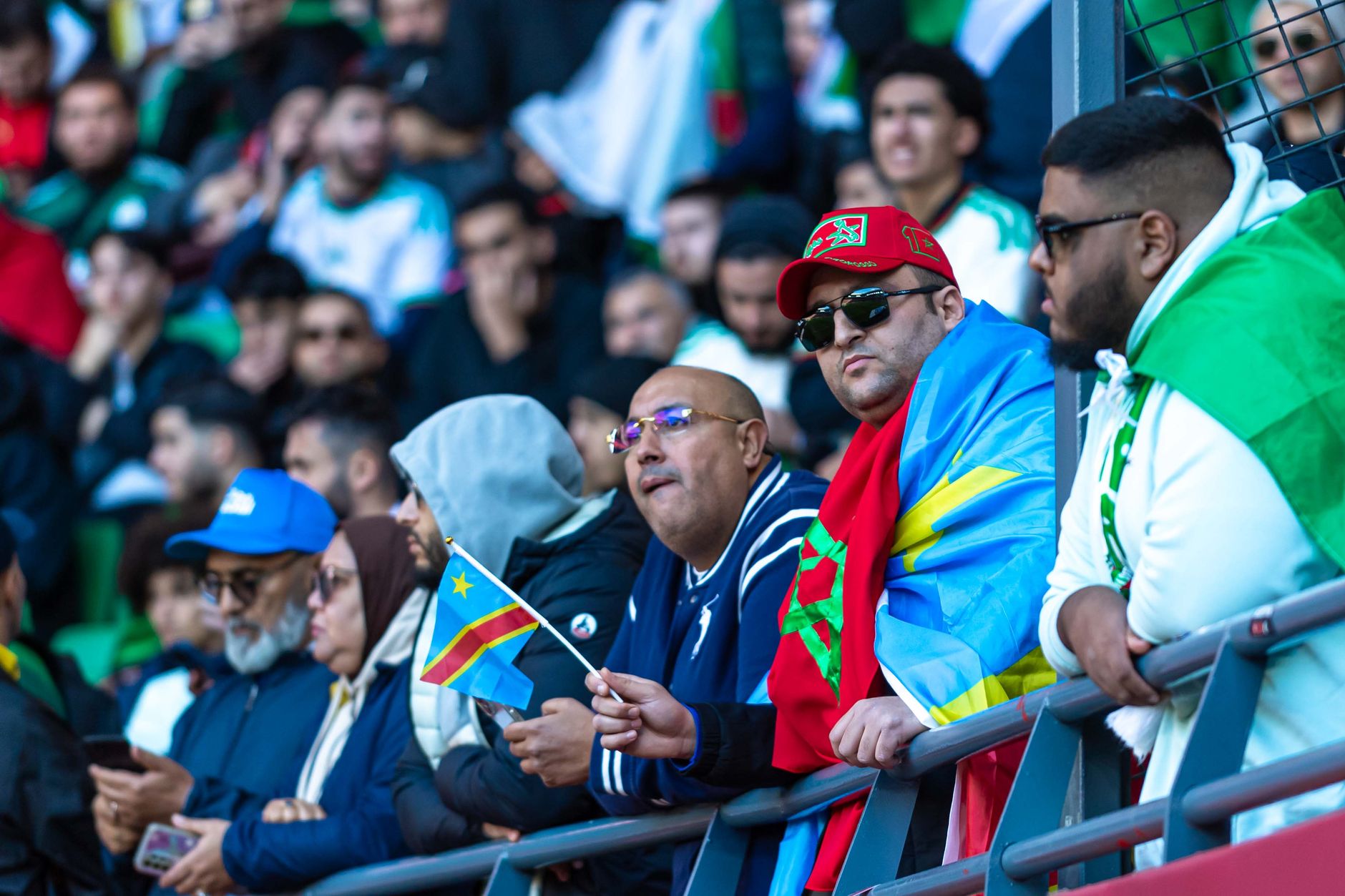
Photo by Guylain Kipoke on Pexels
Ready to organize your match-day research before the fixture rush begins?
What Does the Football World Cup Mean for Los Angeles?
For Los Angeles, the football world cup means eight SoFi Stadium matches, a June 12 U.S. Men’s National Team opening match, the FIFA Fan Festival at the LA Memorial Coliseum, and official fan activity throughout Los Angeles County. The city’s value is therefore both sporting and cultural: visitors can combine elite football with food, music, community events, and regional sightseeing during a 39-day celebration period.
The local planning challenge is scale. Los Angeles County is geographically broad, and “Los Angeles” does not describe one compact event district. Accommodation near SoFi Stadium may reduce match-day travel, while central locations can provide better access to the LA Memorial Coliseum and downtown attractions. Supporters should compare total journey time, not simply nightly room price. A cheaper hotel that adds two hours of round-trip transport can become more expensive in practice after rides, meals, and lost time are included.
The stadium experience also differs from the fan-festival experience. SoFi Stadium offers the match itself, with controlled entry and assigned seating, while the FIFA Fan Festival is intended for broader public celebration and match viewing. Official fan zones may create additional community access across the region. Fans should verify whether a particular event is ticketed, timed, age-restricted, or subject to capacity limits before making a day plan.
There is a useful financial insight here. Visitors should build a four-line budget: accommodation, transport, event access, and food. If a trip lasts five nights and transport costs rise by even $25 per day, that is a $125 adjustment before meals or merchandise. This is why a regional itinerary can outperform an ambitious multi-city itinerary, even for supporters with sufficient funds. The best football world cup trip is not always the one with the most matches; it is the one with the fewest avoidable logistical failures.
- Base the itinerary around one host-city cluster.
- Confirm official match and fan-event information separately.
- Allow at least 90 minutes for major event arrival.
- Price transport for every day, not only match days.
- Keep a backup plan for heat, traffic, or capacity restrictions.
[Internal Link: Los Angeles match-day planning guide]
What Are Three Predictions for the Next Quarter?
Three near-term predictions stand out for the next quarter: schedule searches will intensify, host-city accommodation pressure will rise, and tactical analysis will become more valuable as squads take shape. These predictions are based on the 2026 tournament’s 48-team scale, 104-match schedule, eight-match Los Angeles program, and the growing volume of venue-specific planning required from supporters.
First, official schedule pages will become the dominant reference point as supporters move from general interest to purchase decisions. Fixture dates, kickoff times, venue notices, and ticket processes are more actionable than broad tournament news. Readers should save the official FIFA page and the relevant host-city page, then compare updates instead of relying on screenshots shared on social media.
Second, accommodation and local transportation will become more sensitive to match importance. A U.S. opening match in Los Angeles on June 12 is likely to attract more attention than a lower-profile group fixture, although final demand depends on participating teams and ticket access. The practical prediction is not that every hotel will become unaffordable; it is that flexible cancellation terms and proximity to reliable transport will carry a measurable premium.
Third, team-level analysis will separate useful coverage from recycled commentary. With 48 teams, many matchups will lack recent World Cup precedent. Analysts who explain pressing triggers, defensive rest shape, midfield spacing, and player availability should provide more value than those who repeat FIFA rankings. World Cup Hub will focus on that gap through daily predictions, tactical notes, and player-stat context.
The first quarter after schedule confirmation is also when misinformation tends to spread. A graphic may show a date without a confirmed kickoff time, or a fan event may be described as “official” without appearing on the organizer’s website. My recommendation is deliberately unglamorous: verify the event, verify the venue, and verify the date on two authoritative pages. It takes roughly three minutes and can prevent an expensive mistake.

Photo by https://kaboompics.com/ on Pexels
For ongoing fixture analysis and responsible match research, you can review the latest coverage here.
Frequently Asked Questions
Q: What is the 2026 football world cup format?
A: The 2026 football world cup features 48 national teams and 104 matches across Canada, Mexico, and the United States. This expands the previous 32-team, 64-match format used in 2022. The larger tournament creates more group-stage fixtures, more travel variables, and additional opportunities for teams with less World Cup experience. Always confirm the final competition rules through FIFA before relying on an unofficial bracket.
Q: How can I follow the football world cup schedule?
A: Follow the schedule through FIFA’s official tournament pages and the relevant host-city organizer, then convert kickoff times into your local time zone. For Los Angeles, the local organizer identifies eight matches at SoFi Stadium and a June 12 U.S. opening match. Save official updates rather than relying on social-media graphics, because fixture times, entry procedures, and event details can change.
Q: What is the difference between the FIFA Fan Festival and a stadium match?
A: A stadium match is the live competition inside a controlled venue, while the FIFA Fan Festival is a broader public celebration with match viewing, food, music, and fan activities. The Los Angeles FIFA Fan Festival is associated with the LA Memorial Coliseum at Exposition Park. These experiences may have different access rules, capacity limits, transport arrangements, and schedules, so check each organizer separately.
Q: How much should a Los Angeles World Cup trip cost?
A: There is no single fixed price, but a responsible budget should separately estimate accommodation, transport, event access, and food. A five-night trip with an additional $25 daily transport cost already adds $125 before meals or merchandise. Prices vary by match demand, hotel location, and booking date, so flexible cancellation terms and a venue-accessible base can be more valuable than the lowest advertised room rate.
Q: What should I do if World Cup event information conflicts?
A: Treat the official FIFA or host-city organizer page as the primary source and delay payment until the conflict is resolved. Compare the event name, date, venue, start time, and access requirements across at least two authoritative pages. If a social post differs from Los Angeles FIFA World Cup 26 information, contact the organizer directly rather than trusting a screenshot or reseller listing.
Q: Is World Cup Hub suitable for match predictions?
A: World Cup Hub is designed for football world cup coverage involving match predictions, team tactics, player statistics, and tournament updates. Its analysis can help organize information, but it cannot guarantee a result or remove gambling risk. Readers should review assumptions, use a fixed entertainment budget, avoid chasing losses, and follow the laws and age requirements that apply in their location.
Q: How should I compare teams before a World Cup match?
A: Compare expected lineups, injuries, recent opposition quality, tactical shape, rest days, and travel conditions before considering rankings or market prices. A team’s pressing system may be less effective after congested travel, while a compact counterattacking side may benefit from the opponent’s aggressive full-backs. Record the reasoning before kickoff, then review the outcome afterward to distinguish analytical skill from ordinary match variance.
The football world cup is no longer a compact 32-team event that can be understood through rankings and headline players alone. In 2026, the 48-team field, 104-match schedule, three-country footprint, and eight-match Los Angeles program require a more practical method. Use official sources for dates, local organizers for access information, and World Cup Hub for tactical and statistical context. Most importantly, plan the journey as carefully as the match. That is where the real difference usually appears.
Want to keep your 2026 tournament research organized from fixture news to final predictions?