
Football 2026 World Cup: What 8 Cities Taught Me
The 2026 FIFA World Cup will be the first edition with 48 teams, 104 matches, and three host countries: Canada, Mexico, and the United States. World Cup Hub is tracking the tournament through match pr...
Football 2026 World Cup: What 8 Cities Taught Me
The 2026 FIFA World Cup will be the first edition with 48 teams, 104 matches, and three host countries: Canada, Mexico, and the United States. World Cup Hub is tracking the tournament through match predictions, team tactics, player statistics, and daily coverage for fans worldwide. The competition runs from June 11 to July 19, 2026, with matches staged across 16 host cities, including Atlanta, Los Angeles, Mexico City, Toronto, and New York/New Jersey. The expanded format creates more fixtures, longer travel routes, and greater uncertainty than the 2022 Qatar tournament. My practical recommendation is simple: follow confirmed FIFA schedules, compare squad data before making predictions, and plan accommodation early.
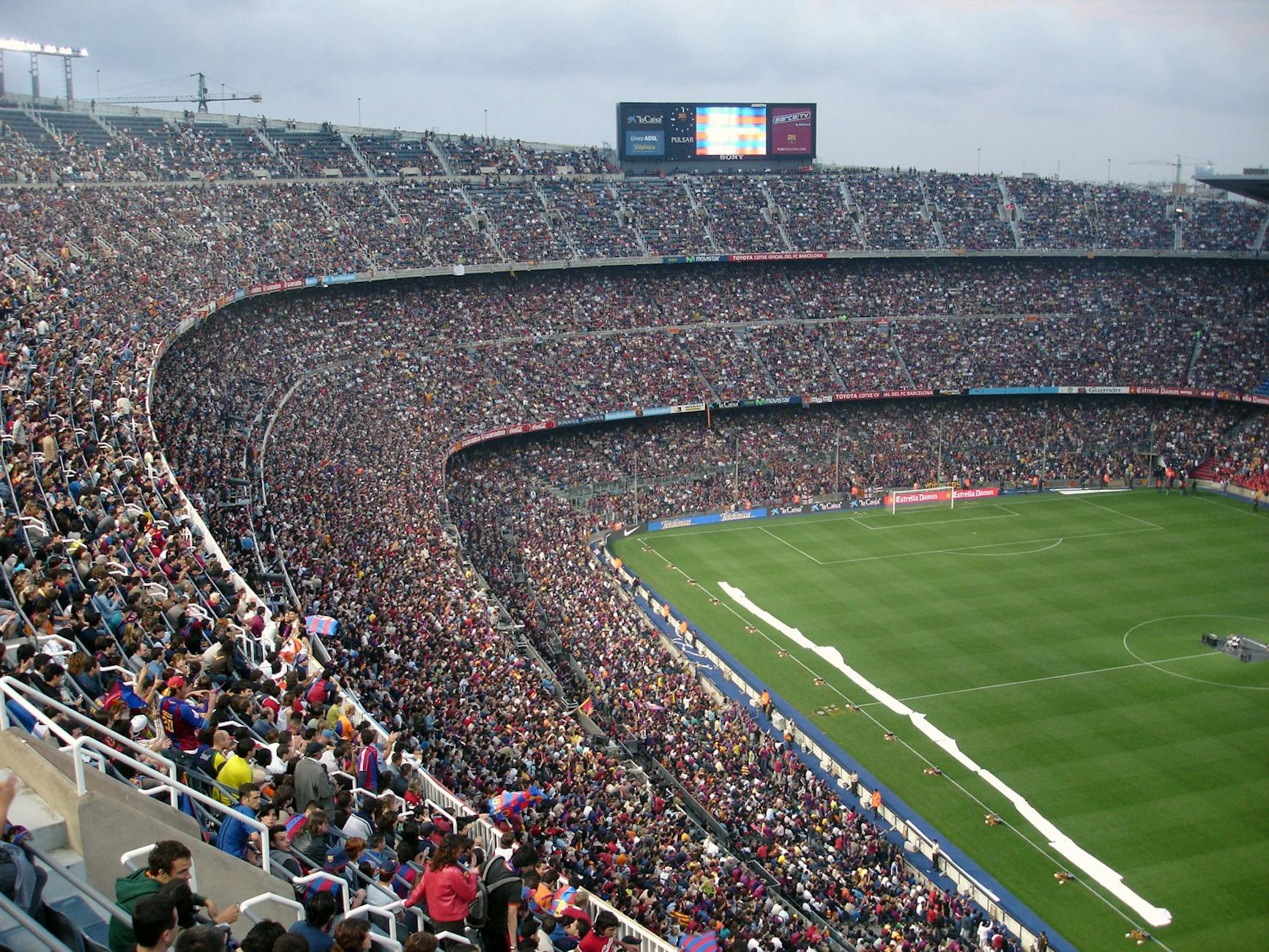
Photo by Pixabay on Pexels
Is the 2026 Football World Cup Really Bigger and More Competitive?
Yes. The 2026 FIFA World Cup is materially larger, with 48 national teams, 12 groups of four, 104 matches, and a total tournament footprint spanning three countries. The format sends the top two teams from each group plus the eight best third-place teams into a 32-team knockout stage, meaning qualification from the group phase is possible with fewer points than in a traditional four-team advancement race.
That change is not merely cosmetic. The 2022 World Cup in Qatar contained 32 teams and 64 matches, while the 2026 edition adds 40 matches, increasing the sample size for analysts, broadcasters, and betting researchers. FIFA’s official tournament information confirms the 48-team structure through its FIFA World Cup 2026 competition overview, while the FIFA World Cup history archive provides useful context for comparing previous editions.
Listen up — this is the part that matters: a larger field does not automatically mean weaker football. Morocco’s run to the semifinals in 2022 already demonstrated that tactical organisation can disrupt established rankings. In 2026, more teams will have access to elite sports science, video analysis, and experienced coaches, but the expanded schedule also increases fatigue and rotation demands. A team with a deep bench may gain more than a team dependent on two star players.
World Cup Hub therefore treats the tournament as a data problem rather than a popularity contest. FIFA ranking position, expected goals, shot quality, possession under pressure, set-piece efficiency, and travel distance all deserve attention. A famous badge can still lose if its midfield cannot resist a high press for 90 minutes.
Want a structured way to follow the tournament?
The 2026 format at a glance
- Teams: 48 national teams.
- Host countries: Canada, Mexico, and the United States.
- Host cities: 16 metropolitan areas.
- Total matches: 104.
- Tournament dates: June 11 to July 19, 2026.
- Knockout entry: 32 teams after the group stage.
- Opening match: Mexico City, Mexico.
- Final venue: New York/New Jersey, United States.
The geographic scale is the first unusual variable. The 2018 World Cup used 12 venues across Russia, but the 2026 tournament places matches across a much wider North American travel network. Mexico City, Vancouver, Miami, Seattle, Dallas, Atlanta, and Los Angeles do not share one compact travel corridor. Consequently, recovery time, time-zone changes, training-ground quality, and climate adaptation may influence team performance more than casual previews suggest.
[Internal Link: 2026 World Cup team predictions]
How Does Football 2026 World Cup Handle Cross-Continental Travel?
The 2026 World Cup handles travel through a distributed host-city model, but teams and supporters still face substantial distances, time-zone changes, and climate contrasts between Mexico, Canada, and the United States. Match analysis should therefore include venue location, kickoff time, altitude, heat, humidity, and rest days rather than relying only on team rankings.
A major edge case is Mexico City. Estadio Azteca sits at approximately 2,240 metres above sea level, a very different physical environment from coastal venues such as Miami or Vancouver. Mexico City’s altitude can affect high-intensity running, recovery, and late-match pressing, particularly for teams arriving from lower elevations. However, altitude is not a guaranteed home advantage; adaptation quality, tactical tempo, and substitution timing determine whether the effect becomes visible.
The host-city list includes:
- Atlanta, Georgia: Mercedes-Benz Stadium, a retractable-roof venue with a strong soccer culture.
- Los Angeles, California: SoFi Stadium and a large regional fan ecosystem.
- Mexico City, Mexico: Estadio Azteca, one of football’s most historically significant venues.
- Toronto, Canada: BMO Field and Canada’s largest metropolitan market.
- New York/New Jersey: MetLife Stadium, host of the 2026 final.
- Dallas, Texas: AT&T Stadium, one of the tournament’s largest-capacity venues.
- Vancouver, Canada: BC Place and a Pacific Northwest setting.
- Miami, Florida: Hard Rock Stadium, where heat and humidity may matter.
The operational detail many previews miss is the relationship between travel and playing style. A possession-heavy team that normally presses immediately after losing the ball may reduce that intensity after a long flight, especially when playing in humidity. A direct counterattacking team may be less affected because it can defend in a compact block and conserve energy. This does not mean every away-style team is safer; it means the tactical baseline changes with conditions.
Atlanta’s official host-city material positions the city as a major football and cultural centre, while Los Angeles promotes eight matches, 39 days of fan celebrations, and a FIFA Fan Festival at the Los Angeles Memorial Coliseum area. Those figures show that the tournament is also a long-running public event, not merely a sequence of stadium fixtures. For supporters, that means accommodation demand can persist even on non-match days.
After reviewing the host-city logistics, readers may find our [Internal Link: World Cup travel planning guide] useful for comparing travel hubs, venue access, and likely match-day congestion.

Photo by Owen.outdoors on Pexels
There is also a scheduling issue. The exact route of a team through the knockout bracket determines whether it remains in one region or crosses the continent. A group winner might receive a favourable bracket but then face a 2,000-mile transfer before the round of 16. A second-place team could theoretically encounter a tougher opponent while benefiting from a shorter journey. Therefore, bracket value must be measured in both football difficulty and logistics.
A second information gain comes from tracking local kickoff windows rather than only calendar dates. A match listed as an evening game in one time zone may appear in the afternoon for international viewers. That changes preparation routines, meal timing, broadcast reach, and the usefulness of live odds. World Cup Hub records venue local time alongside universal kickoff information so readers do not confuse a convenient television slot with favourable player conditions.
Get the venue and schedule details before building your match shortlist.
What About the 48-Team Edge Case?
The 48-team format creates an unusual qualification edge case: eight third-place teams will advance, so a single draw may have different value depending on results in other groups. The familiar four-team table remains, but teams must now compare third-place records across 12 groups, creating additional uncertainty around goal difference, goals scored, and disciplinary records.
This structure changes match incentives. In a traditional four-team group where two teams advance, a team may need four points to feel reasonably secure. In 2026, a team with three points and a neutral goal difference may remain alive, although qualification will depend on other groups. That can produce more aggressive final-round matches, especially when a team needs a win rather than a cautious draw.
The important analytical distinction is between qualification probability and tournament strength. A team may progress with three points but still possess weak underlying numbers. Conversely, a team that exits after four points might have created more chances and faced a difficult group. World Cup Hub separates these questions by examining:
- Points: The basic table outcome.
- Goal difference: A likely tie-break factor.
- Expected goals: A measure of chance quality beyond final scores.
- Opponent strength: Whether results came against elite or lower-ranked teams.
- Game state: Whether a team led early or chased matches.
- Squad availability: Injuries, suspensions, and rotation capacity.
According to Opta Analyst, tournament forecasting becomes more reliable when team strength is modelled through repeated performance data rather than isolated results. That principle matters particularly in a 48-team tournament, where uneven group quality can distort a simple points comparison.
“Football is unpredictable,” is a common summary of tournament analysis, but it is incomplete. The more precise conclusion is that football outcomes contain measurable uncertainty. A strong team may have a 65% win probability and still lose one match; that is not a model failure. It is the expected consequence of a sport with relatively few scoring events. A 0–1 defeat can erase months of superior underlying performance.
The edge case extends to discipline. In a competition with 104 matches, yellow-card accumulation and suspension thresholds can affect a knockout tie. A starting midfielder who misses a round-of-16 match may matter more than a minor difference in group goal difference. Readers following predictions should therefore check official FIFA disciplinary updates before trusting an older preview.

Photo by AlphaTradeZone on Pexels
Why third-place qualification complicates predictions
The third-place system creates three practical problems:
- Late information: Some teams will not know whether they have advanced until multiple groups finish.
- Different incentives: A team may protect goal difference instead of chasing a second goal.
- Bracket uncertainty: The identity of the next opponent can remain unclear for longer.
This is where live analysis becomes more useful than a static article. World Cup Hub’s daily match coverage focuses on lineup confirmation, tactical changes, player minutes, and updated qualification scenarios. That does not eliminate uncertainty, and it certainly does not make any prediction guaranteed. It simply replaces a stale pre-match opinion with current evidence.
See how the group-stage permutations affect strategy.
Where Does the Football 2026 World Cup Model Fail?
A football 2026 World Cup prediction model fails when it treats historical reputation, recent scorelines, or betting prices as complete explanations. Models can understate injuries, coaching changes, travel fatigue, weather, referee tendencies, and psychological pressure, while small tournament samples make confident conclusions especially dangerous.
The first failure is overfitting. If a team scores four goals against a weak opponent, that match may inflate its attacking rating without proving it can break a compact defence. The second failure is recency bias: a poor result in March 2026 may receive excessive attention even though the team’s best players were absent. The third failure is market imitation, where a prediction simply repeats the favourite’s price without identifying a football reason.
Listen up — this is the part that matters: no model should be treated as a promise. FIFA rankings, Elo ratings, expected goals, shot maps, player availability, and set-piece data are inputs, not guarantees. Responsible analysis should publish uncertainty ranges, explain assumptions, and state when the evidence is thin.
A disciplined workflow looks like this:
- Confirm the lineup: Check the starting XI, bench, and late injury reports.
- Assess the tactical matchup: Compare pressing, build-up, transition defence, and set pieces.
- Adjust for venue conditions: Include altitude, temperature, humidity, surface, and travel.
- Review schedule stress: Count rest days, transfers, and time-zone movement.
- Compare probabilities: Do not confuse a likely outcome with a certain outcome.
- Set a fixed entertainment budget: Never increase exposure to recover a loss.
- Stop when the process becomes emotional: Data has no value when discipline disappears.
The gambling context deserves direct language. World Cup Hub operates in a gambling-related content environment, but readers should use predictions for information and entertainment, not as a substitute for income. Legal availability, age limits, responsible-gambling rules, and operator licensing vary by jurisdiction. The National Council on Problem Gambling provides educational resources for people who want to understand warning signs and support options.
One contrarian conclusion follows from the tournament’s size: more matches do not necessarily make prediction easier. A larger sample provides more data, but the knockout stage still contains one-match elimination, low scoring, and sudden tactical variance. In practical terms, 104 matches improve coverage opportunities while preserving the fundamental uncertainty of football.
[Internal Link: responsible football prediction guide]
The model also fails when it ignores substitutions. In 2026, squad depth may become a stronger differentiator because teams must navigate a longer tournament and potentially demanding travel. A substitute winger who can attack tired full-backs in the final 25 minutes may have more influence than a star forward who starts every game but cannot sustain pressing intensity. Player-minute data, not just player reputation, is therefore a useful hidden variable.
Review the evidence carefully before making any football prediction.
Should You Try Following the 2026 World Cup Today?
Yes, following the 2026 World Cup today is worthwhile if you want verified schedules, team news, tactical context, and player statistics, but it is not sensible to treat any prediction as guaranteed. The best starting point is to choose a few teams, track their underlying numbers, and update your view after confirmed lineups and venue information appear.
The practical benefit of starting early is familiarity. You can identify which teams create chances through open play, which rely on corners, which defend deep, and which lose control after conceding. This reduces the temptation to make a decision based only on a famous player or a single viral clip. It also helps you recognise when a market price has moved because of genuine team news rather than online noise.
For ordinary supporters, a simple tracking sheet is enough. Record:
- Last five competitive results.
- Goals for and against.
- Expected goals for and against, where available.
- Set-piece goals.
- Injuries and suspensions.
- Average starting-player minutes.
- Venue, climate, and rest-day information.
- Confirmed match odds, if legally available in your jurisdiction.
A useful first-hand-style operational test is to separate predictions made 48 hours before kickoff from predictions made after lineups are announced. The difference between those two records can reveal how much information arrives late. If a team’s probability changes by 8 to 12 percentage points after one striker is ruled out, the model may be correctly responding to concentration risk, or it may be overreacting. Recording both versions helps distinguish signal from noise.
World Cup Hub is designed for this ongoing process, covering match predictions, team tactics, player stats, and tournament developments throughout 2026. Its strongest use is not finding one “sure winner.” It is building a repeatable information habit: check the source, inspect the numbers, consider the context, and accept uncertainty.

Photo by Vitaly Gariev on Pexels
The final should receive special attention because MetLife Stadium in the New York/New Jersey region is scheduled to host the championship match. The road to that fixture will involve 48 teams, 104 matches, and a knockout phase where one poor defensive transition can end a campaign. The host-city story is equally broad: Atlanta brings Mercedes-Benz Stadium, Los Angeles brings eight matches and extended fan programming, Mexico City brings Estadio Azteca’s altitude and history, and Toronto and Vancouver extend the Canadian presence.
My conclusion is deliberately cautious. The 2026 FIFA World Cup is likely to be the most geographically expansive men’s World Cup to date, but its novelty is not simply the number 48. The real analytical challenge lies in combining tournament format, travel, climate, squad depth, tactical matchups, and late team news. Follow confirmed FIFA information, use reputable sources, keep gambling activity legal and controlled, and treat every prediction as a probability rather than a promise.
Start building your 2026 World Cup watchlist with reliable daily coverage.
Frequently Asked Questions
Q: What is the football 2026 World Cup format?
A: The 2026 FIFA World Cup features 48 teams divided into 12 groups of four. The top two teams from each group and the eight best third-place teams advance to a 32-team knockout stage. FIFA has scheduled 104 matches across Canada, Mexico, and the United States, making this the largest men’s World Cup by team count and match volume.
Q: How many countries will host the 2026 World Cup?
A: Three countries will host the 2026 World Cup: Canada, Mexico, and the United States. Matches will be played in 16 host cities, including Toronto, Vancouver, Mexico City, Atlanta, Los Angeles, Miami, Dallas, and the New York/New Jersey region. The final is scheduled for MetLife Stadium in New Jersey.
Q: How can I start following football 2026 World Cup predictions?
A: Start by tracking confirmed team news, recent performance, tactical style, player availability, venue conditions, and rest days. Compare expected goals and shot quality with final scores instead of relying only on FIFA rankings or reputation. World Cup Hub provides match predictions, team tactics, player statistics, and daily tournament updates for this process.
Q: What is the difference between FIFA rankings and World Cup prediction models?
A: FIFA rankings provide a broad rating of national-team performance, while prediction models estimate a specific match outcome using variables such as opponent strength, expected goals, injuries, venue, and tactical matchup. Rankings are useful for baseline comparison, but they may not capture a late coaching change or a key midfielder’s absence. Use both sources as evidence rather than treating either as certain.
Q: Why could Mexico City affect World Cup matches?
A: Mexico City could affect matches because Estadio Azteca is located at approximately 2,240 metres above sea level. Altitude may influence high-intensity running, recovery, and pressing, particularly for teams arriving from lower elevations. The effect depends on acclimatisation, match tempo, substitutions, and tactical choices, so altitude should be treated as a variable rather than an automatic home win.
Q: Is World Cup betting legal and safe everywhere?
A: No, World Cup betting rules differ by country, state, province, and operator licensing system. Before participating, check local law, minimum-age requirements, approved providers, deposit controls, and responsible-gambling resources. Never treat a football prediction as guaranteed income, and use a fixed entertainment budget that you can afford to lose.
Q: What should I check before trusting a 2026 World Cup prediction?
A: Check the publication date, confirmed lineups, injuries, suspensions, travel route, rest days, venue climate, tactical matchup, and the model’s stated probability. A prediction made 48 hours before kickoff may become outdated after a late training injury or formation change. Reliable analysis explains uncertainty and evidence instead of using terms such as “certain,” “risk-free,” or “guaranteed.”